

You can return any time by using the sub-menu at the top of your screen.

Share this


Polymeric Sand Guide
Choosing the right paving stones for your patio, driveway, or walkway is a big decision. But there’s another important aspect to consider, and that is what will ultimately fill in the gaps between your pavers once they’re installed. Choosing the right product and color also matters. If you want clean lines and a cohesive look, selecting polymeric sand colors that color match your pavers will make the finished patio, walkway, or driveway feel intentional.
Polymeric sand and jointing sand might seem like small details, but they’re essential for completing your paver project. In this article, we’ll explore what polymeric sand is and its benefits, and walk you through the steps to installing it. We will also cover how to evaluate the best polymeric sand for paver joints, simple tips for applying polymeric sand correctly, and how joint color reads across concrete pavers, natural stone pavers, and bricks.
What Is Polymeric Sand?
Polymeric sand is a mixture of coarse-grained sand, polymers, and binding agents which is swept into the joints dry and activated with water after the joints are filled. The paver surface must be swept clean before wetting the pavers to prevent hazing or staining. Trusted by landscaping professionals and contractors, polymeric sand plays a crucial role in securing patio pavers in place and deterring the growth of weeds between pavers. You will find this product labeled as polymeric paver sand, polymeric sands, or simply sand for pavers by different polymeric sand manufacturers. Most polymeric sand products are available in several polymeric sand colors so you can blend or contrast with the field units. Properly installed joints help keep pavers locked together and resist weed growth and washout.
The Benefits of Polymeric Sand
Using polymeric sand requires precision and attention to detail to prevent excess sand from activating and hardening on the surface, which can be tricky to remove. But why choose polymeric sand over regular jointing sand?
A project finished with polymeric sand boasts greater strength and longevity compared to one using regular jointing sand. This resilience comes from the binding agent within the sand, ensuring it remains steadfast for years to come. When you have tight joints or variable joint width, the binding action helps distribute loads so interlocking pavers stay aligned on sloped paver surfaces like a driveway.
Unlike regular jointing sand, polymeric sand forms tight bonds with adjacent pavers, resisting erosion, even during heavy rainfall. This means you won’t have to worry about constantly replacing washed-away sand thanks to the binding agent, which is activated using water. The end result is fewer touch-ups, cleaner edges on a paver patio, and a surface that sheds water without pulling loose sand out of the paver joints.
While weeds might still find their way between your pavers when using regular jointing sand, activated polymeric sand creates a nearly airtight seal, significantly reducing the risk of weed growth. Plus, it makes it harder for pests like ants to invade the crevices between your pavers. If you are upgrading an older patio or walkways that previously used regular paver sand, switching to the best polymeric option your site conditions allow can noticeably reduce maintenance.
Just like regular jointing sand, polymeric sand comes in various colors, allowing you to choose the perfect match for your patio pavers. So, you don’t have to sacrifice aesthetics to enjoy enhanced durability. Choosing complementary polymeric sand colors can make small format pavers feel seamless or can highlight a pattern on concrete or natural stone. A charcoal joint can frame light units, while a tan joint can blend with warm stone.
How to Install Polymeric Sand
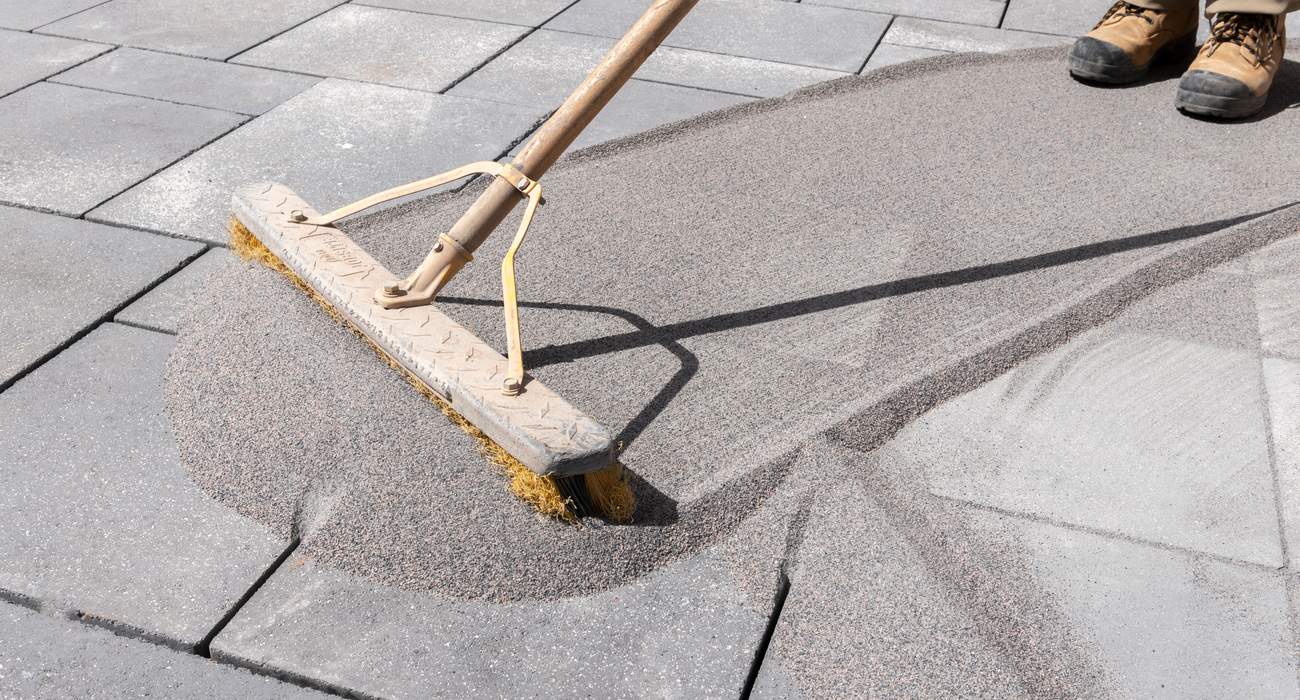
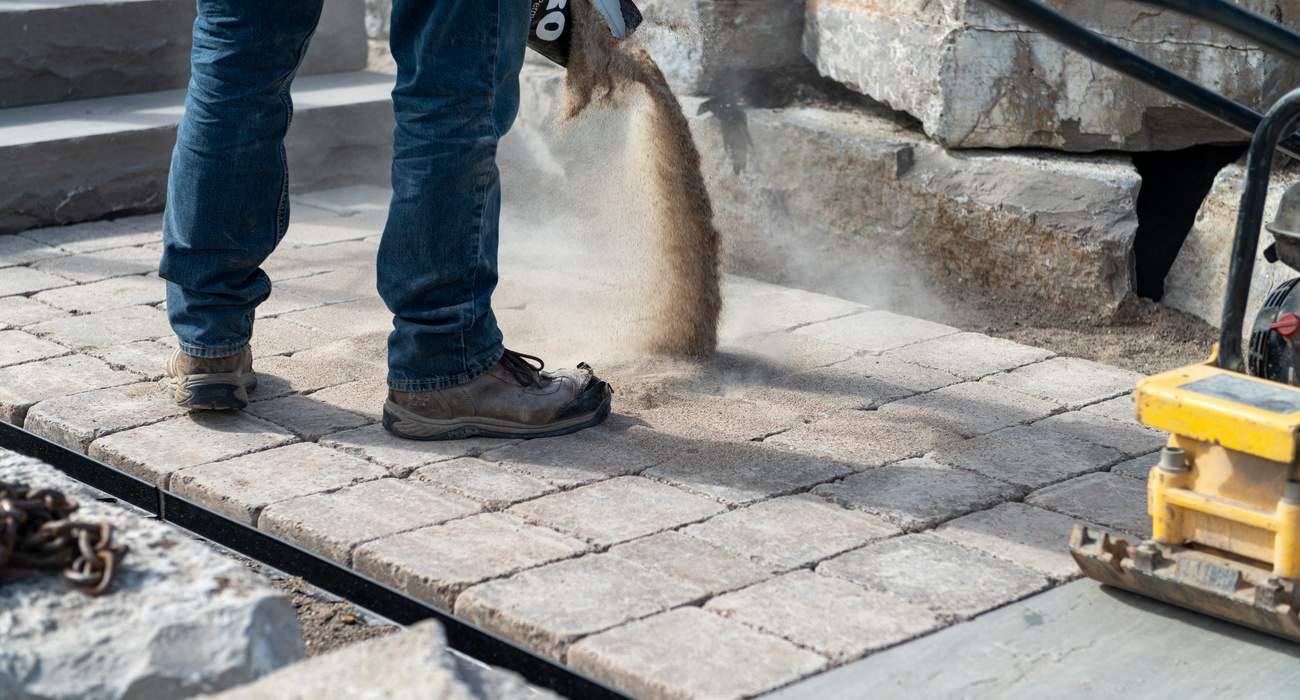
After installing your pavers, the next step involves adding polymeric sand and compacting the pavers, which will help settle the sand between the joints. We recommend using polymeric sand that meets ASTM C144 or C33 specifications. Before applying polymeric sand, make sure the surface is completely dry, the weather is clear, and the base is stable. Check the bag for recommended joint width and compaction steps from the polymeric sand manufacturers.
Carefully sweep the polymeric sand across the surface, ensuring that the gaps between your pavers are filled to roughly 1/8” below the rounded or beveled edge of each paver. Remove any excess sand from the surface using a soft bristle broom and/or a leaf blower before compacting the pavers to avoid scuffing. Work diagonally across the pattern so the material drops into the paver joints rather than skimming over them. Gently vibrate or compact according to the instructions, then remove excess sand again. This helps avoid residue on textured concrete pavers or natural stone pavers and keeps the joint height consistent.
Once the surface is fully compacted, lightly wet your pavers using a hose with a sprinkle head attachment. This step activates the binding agent of the polymeric sand, locking the pavers firmly in place. Mist in passes instead of flooding so you do not wash out corners or create excess sand streaks. Activate from the top down until the joints are fully hydrated and allow proper cure time before traffic.
How Many Years Does It Last?
The lifespan of polymeric sand can vary depending on the quality of the product, the installation process, and the environmental conditions it’s exposed to. Generally, when properly applied and maintained, polymeric sand can last for several years.
Selecting Polymeric Sand Colors
Color is part of performance because it affects how your eye reads the finished field. With sleek concrete pavers, a close color match reduces visual grid lines for a contemporary look. With variegated natural stone, a mid-tone joint can tie cool and warm tones together. For clay bricks, a contrasting joint emphasizes the classic running bond. If the project connects a paver patio to a walkway or driveway, repeating the same polymeric sand colors can unify the spaces.
Alternatives To Polymeric Sand
Alternatively, you can still opt to use regular jointing sand to fill the gaps between your pavers. This type of sand is very common in hardscape projects, with its primary function being to fill the gaps between paver joints to secure them in place. This sand variant consists of medium coarse-grained silica and is generally perceived as a cost-effective option when compared to polymeric sand. There are two ways to install regular joint sand. The first is on its own, and the second is in conjunction with a joint sand stabilizing sealer. The latter is preferred as it helps prevent joint sand washout and protects against weed growth and insect infestation. If you choose this route, understand that regular paver sand may require more frequent top-ups, especially on wider joints or steeper paver surfaces.
Another type of sand is resin sand, which is a mixture of graded sands and resins that form a solid joint when exposed to air. This product can be installed either wet or dry, and while it does have some permeability, it should not be used for true permeable application. Always verify compatibility with your specific paver projects and follow the activation schedule to avoid surface residue.
When Should You Not Use Polymeric Sand?
When it comes to the choice between polymeric sand and regular jointing sand, we tend to recommend polymeric sand first as it ensures optimal stability and longevity, and requires less maintenance compared to regular jointing sand. However, polymeric sand is not ideal for heavily textured paving stones, such as Il Campo or Series, as the deep grooves in these stones can trap polymer particles. When wet, these particles may stick to the surface, creating a stubborn, hazy appearance that’s difficult to remove. In such cases, we recommend an alternative approach using regular jointing sand in conjunction with a joint sand stabilizing sealer. We recommend waiting a minimum of 3 months after installation before applying a sealer, to allow for the natural efflorescence to dissipate. In deeply textured finishes, even careful applying polymeric sand can leave residue that looks like a film. If you see buildup, stop work, let the surface dry, and gently brush to remove excess sand before activation.
Polymeric Sand Vs. Regular Jointing Sand
Let’s look at some of the pros and cons associated with using polymeric sand versus regular jointing sand between your pavers:
| Polymeric Sand | Regular Jointing Sand |
| Pros:
Durability: Polymeric sand is known for its exceptional durability. It forms a strong bond when activated with water, which helps lock pavers together and prevents them from shifting. This is especially useful on driveway aprons and entries where turning tires stress the edges.
Weed Prevention: Polymeric sand contains additives that inhibit weed growth between pavers. This reduces the need for frequent weeding and maintenance. Keeping joints filled to the proper height further discourages weed growth.
Insect Resistance: The superior lock-up of polymeric sand makes it less attractive to insects like ants, reducing the likelihood of ant infestations under the pavers.
Reduced Erosion: Polymeric sand is less susceptible to erosion caused by heavy rain or water runoff due to the special additives that help bind the pavers in place, ensuring a stable paver installation over time. On steep walkways, step landings, and raised patio edges, this can greatly reduce wash lines and keep pavers locked together.
|
Pros:
Repairs are easier: it is easier to make repairs to the paved area if necessary because the pavers do not stick together making them easier to pull up and when you put them back in, ordinary joint sand will blend in easier color-wise. For small spot repairs, keeping a bag of the same joint color can help maintain consistent appearance across different paver surfaces.
|
| Cons:
Cost: Polymeric sand is typically more expensive when compared to regular jointing sand, which may contribute to the overall project cost. The tradeoff is fewer reapplications over time compared to loose sand.
Complex Installation Process: Installing polymeric sand demands meticulous attention to detail, including thorough compaction and ensuring a completely dry surface before introducing water. Keeping a watchful eye on the weather is extremely important to make sure that the pavers are kept dry before the application of polymeric sand. This level of precision may pose challenges for inexperienced DIY enthusiasts. Therefore, opting for polymeric sand installation is often better suited to seasoned professionals, such as Unilock Authorized Contractors. Read the activation steps on your chosen polymeric sand products and test a small area first.
Not Ideal for Textured Pavers: Polymeric sand is not recommended for heavily textured paving stones, like Il Campo or Series, as the deep grooves in these stones can trap polymer particles. When wet, these particles may stick to the surface, creating a stubborn, hazy appearance that’s difficult to remove. In such cases, we recommend an alternative approach using regular jointing sand in conjunction with a joint sand stabilizing sealer. When working with split-face borders or flamed natural stone, shield the edges while sweeping to keep fines off the surface. |
Cons: Limited Durability: Regular jointing sand, unless accompanied by a joint stabilizing sealer, lacks the bonding properties of polymeric sand, making it less effective at preventing joint sand washout and weed growth.
Prone to Weeds: Weeds and grass can easily grow between the joints, leading to a less aesthetically pleasing surface that requires regular maintenance.
Erosion: Regular jointing sand is more prone to erosion, which can result in uneven paver surfaces and the need for frequent reapplication of joint sand over time.
Prone to Insect Infestation: Regular jointing sand’s loose nature allows ants to pass through the joints easily, potentially resulting in the formation of ant hills or mounds on the surface. A stabilizing sealer can help, but it does not typically match the performance of the best polymeric sand in heavy rain.
|
Why Choose Polymeric Sand For Paver Jointing
If you’re willing to invest in longevity and ease of maintenance, polymeric sand is truly the best choice. Polymeric sand provides long-lasting stability and is less susceptible to erosion caused by heavy rainfall or water runoff, while also providing superior lock-up that inhibits weed and insect infestations. Combine the right polymeric sand colors with a compatible formula and you get both design and durability. On modern concrete pavers with narrow joints, a close color match creates a monolithic look. On traditional clay bricks, a contrasting joint highlights the pattern without sacrificing performance.
If you require advice or expert support, don’t hesitate to contact a trusted Unilock Authorized Contractor. Their knowledge and experience will pave the way to a successful polymeric sand application. They can also help you choose the best polymeric sand for site conditions, confirm the correct joint width, and protect sensitive surfaces while applying polymeric sand so there is no residue or color shift on high-end materials.
Related
Articles
We’re Here To Help
We make it easy to get inspired, plan, and start your project.

See our Catalog of Dreams
Explore ideas, spark inspiration, and see our full range of Unilock products.

Get your freeestimate today
Partner with a Unilock Authorized Contractor for best-in-class results.

Plan your dream project beautifully
Excited to start a new project? Get our Project Planning Guide and plan with ease.